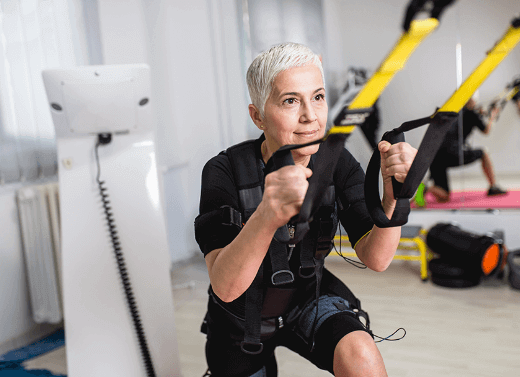
Our bodies use electricity to move: for each motion, the brain dispatches an electric signal through our motor neurons to the right group of muscles, and the muscles then move in unison to make us move.
These electrical signals act as instructions and that’s the same system that is at the core of electrical muscle stimulation. EMS mimics the same signals our brains use and delivers targeted electrical pulses to trigger deep, intense, and complete muscular contractions without the need for high-impact motion or heavy weights.
 Long before humans knew what electricity
was, ancient Egyptians discovered that certain types of catfish found in the Nile had
electro-generating properties and could be used to treat pain.
Subsequent civilizations across Europe
used this knowledge to devise targeted treatments. A true breakthrough came in the late 18th
century through the work of two Italian scientists: Luigi Galvani was the
first to prove that muscles can be moved by electricity; and Alessandro Volta
built upon Galvani’s work to lay the foundation of electrochemistry.
While some of their early conclusions
seem dubious today, their work jolted the field of electrophysiology to life.
Long before humans knew what electricity
was, ancient Egyptians discovered that certain types of catfish found in the Nile had
electro-generating properties and could be used to treat pain.
Subsequent civilizations across Europe
used this knowledge to devise targeted treatments. A true breakthrough came in the late 18th
century through the work of two Italian scientists: Luigi Galvani was the
first to prove that muscles can be moved by electricity; and Alessandro Volta
built upon Galvani’s work to lay the foundation of electrochemistry.
While some of their early conclusions
seem dubious today, their work jolted the field of electrophysiology to life.
Like many modern fitness tools, EMS initially required a doctor to prescribe and oversee the treatment, and a skilled physical therapist with the right tools to carry out the rehabilitation plan, typically carried out in office and with a single muscle group.
The results were effective but required significant time and resources, thus limiting the technology to supervised therapy. In the more recent past, EMS was embraced by professional athletes who expanded its uses beyond recovery to enhance strength, increase muscular adaptations, and proactive injury prevention.
As the uses for EMS evolved so did the technology required to deliver it: a high-quality EMS suit like SQAI now lets you enjoy the full benefits of EMS-enhanced training wherever you happen to be.
Now that it no longer requires fish or heavy, cumbersome equipment, EMS is used for:






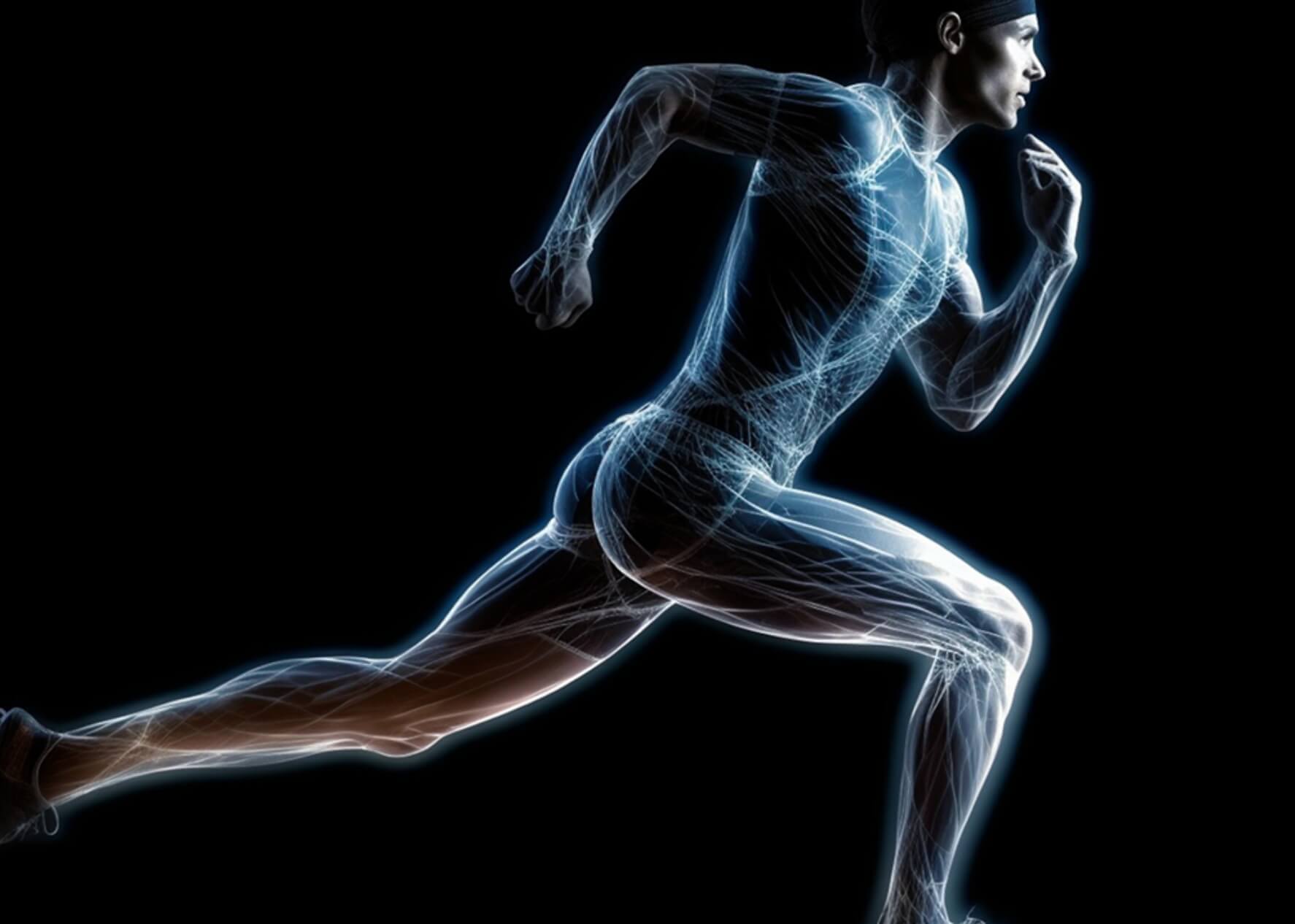
During conventional exercise, our central nervous system acts as a gatekeeper, limiting recruitment to roughly 40-50% of total muscle fibers. This natural energy conservation mechanism ensures we don’t exhaust ourselves too quickly. Adding EMS to your exercise routine allows you to activate up to 90% of all available muscle fibers: that’s why just 20 minutes in an EMS suit surpasses hours spent with more traditional workouts. EMS also unlocks compound muscle movements: compared to single-muscle movements like crunches or bicep curls, EMS offers a significant advantage in terms of “time under tension” (TUT).
By inducing hundreds of contractions per second across numerous muscle groups simultaneously, EMS dramatically increases the total time your muscles spend in a contracted state. This prolonged tension is a key factor in accelerating muscle building and boosting performance.
The result? EMS presents a unique tool for neuromuscular recruitment, exceeding the capabilities of conventional training methods and leading to enhanced muscle activation and training efficiency.
DISCOVER THE EXPERIENCEDecades of scientific research support the transformative potential of EMS
The success of EMS in physical therapy sparked extensive scientific research, demonstrating the ability of EMS to actively build muscle mass in a safe and effective way. Below are some of the many relevant studies that highlight the effectiveness of EMS as a practical tool for strength gains, performance enhancement, and overall health and wellness:
Effect of Patterned Electrical Neuromuscular Stimulation on Vertical Jump in Collegiate Athletes
K.Watanabe et al Effect of exercise intensity on metabolic responses on combined application of electrical stimulation and voluntary exercise. Physiological Reports
K.Watanabe et al Relationships between muscle strength and multi-channel surface EMG parameters in eighty-eight elderly Eur Review Aging and Physical Activity
See what’s happening with SQAI. We share our best ideas in our blog

Join our mailing list for the latest product news, special offers and more